Introduction
In today’s digital-first real estate market, buyers form opinions about a property within seconds of seeing its photos. Because of this, visual presentation has become one of the strongest tools for attracting attention, generating inquiries, and closing deals faster. Among the many techniques used in property photography, Day to dusk editing for realtors stands out as one of the most powerful—and also one of the most misunderstood.
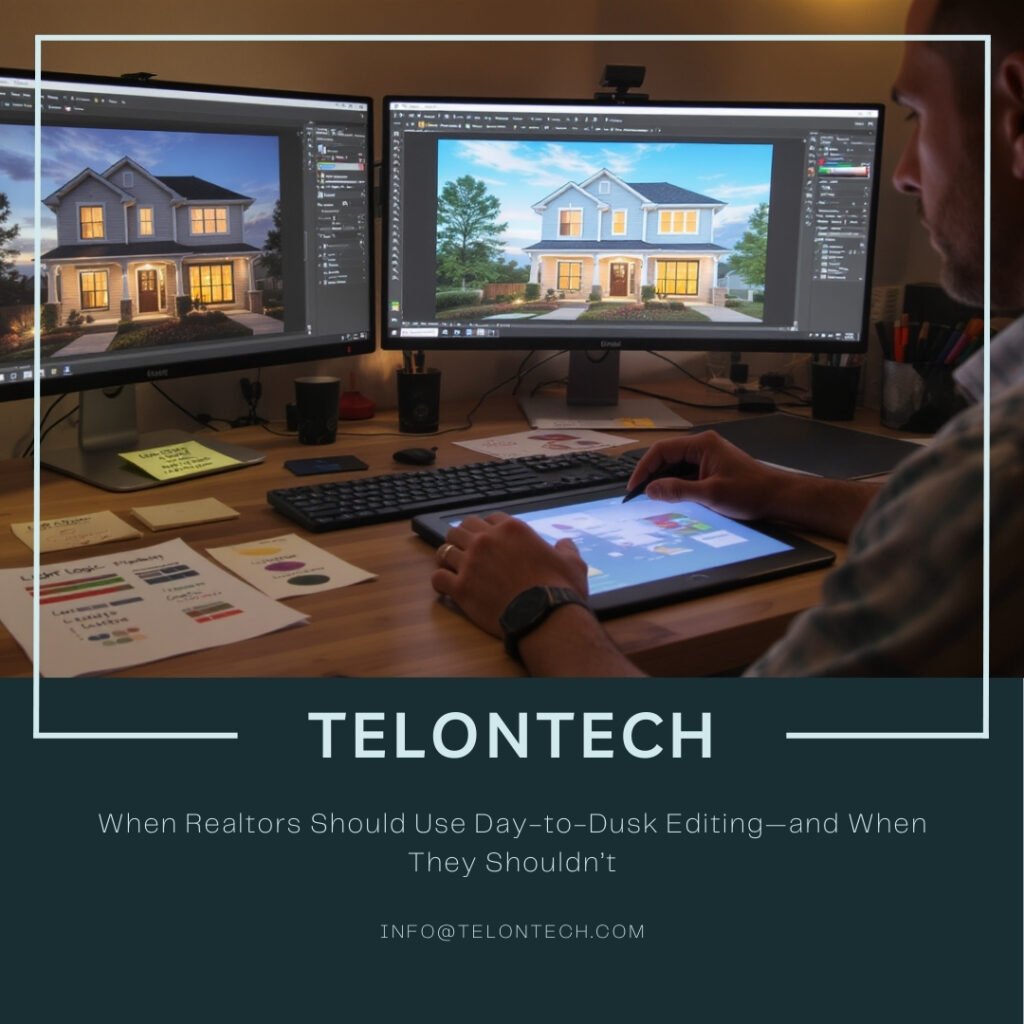
Day to dusk editing for realtors transforms a normal daytime photo into a twilight-style image, where the sky looks dramatic, lights glow warmly, and the overall mood feels premium and inviting. When used correctly, this technique can significantly increase a property’s perceived value. However, when used incorrectly, it can confuse buyers, reduce trust, and even hurt a listing’s performance.
This blog explores when realtors should use day-to-dusk editing—and when they shouldn’t, in a practical, balanced, and strategic way. You will learn how to use this technique to enhance your listings without damaging credibility, while keeping buyer expectations realistic and engagement high.
1. What Is Day-to-Dusk Editing in Real Estate?
Day to dusk editing for realtors is a post-processing technique where a standard daytime exterior photo is digitally transformed into a sunset or twilight scene. Editors adjust the sky, lighting, window glow, shadows, and overall color balance to simulate how the property would look during golden hour or early evening.
Instead of scheduling an actual twilight photoshoot, which can be expensive and time-consuming, realtors use day-to-dusk editing to achieve a similar effect quickly and affordably. Because of this, many agents now rely on this method to add emotional appeal to their listings.
However, day-to-dusk editing is not about creating fantasy. It should still represent the real structure, layout, and lighting potential of the property. When done professionally, it enhances reality instead of replacing it.
2. Why Day-to-Dusk Images Attract More Buyers
From a psychological perspective, twilight images trigger strong emotional responses. Warm lighting, colorful skies, and glowing interiors make homes feel more welcoming, safer, and more luxurious. As a result, buyers often spend more time looking at listings that include day-to-dusk images.
Moreover, these images stand out on listing platforms where most properties look similar. While standard daylight photos may blend into the background, twilight-style images immediately catch the eye and increase click-through rates.
In addition, Day to dusk editing for realtors works especially well on social media. Platforms like Instagram, Facebook, and LinkedIn favor visually striking content. Therefore, agents who use this technique often see higher engagement, more shares, and stronger brand perception.
3. When Realtors Should Use Day-to-Dusk Editing
Realtors should use day-to-dusk editing when the property has strong exterior features that deserve visual emphasis. For example, homes with beautiful landscaping, architectural lighting, large windows, or outdoor spaces benefit greatly from twilight-style presentation.
This technique also works well for:
- Luxury homes
- Waterfront properties
- Villas and high-end apartments
- New construction projects
- Gated communities
In these cases, day-to-dusk editing highlights lifestyle, not just structure. It helps buyers imagine themselves living in the space, enjoying evenings on the patio, or relaxing in a well-lit environment.
4. When Realtors Should Avoid Day-to-Dusk Editing
Despite its advantages, day-to-dusk editing is not suitable for every listing. Realtors should avoid using it when the property does not match the premium look created by twilight effects.
For example, older homes with poor exterior condition, low lighting potential, or cluttered surroundings may look misleading when edited. If the real property cannot realistically achieve that appearance, buyers may feel disappointed during site visits.
Additionally, budget listings, rental properties, or fixer-uppers usually perform better with honest daylight photos. In these cases, transparency builds trust faster than visual dramatization.
5. The Difference Between Enhancement and Deception
One of the biggest risks with Day to dusk editing for realtors is crossing the line between enhancement and deception. Enhancement improves visibility, lighting, and mood while keeping all structural elements real. Deception alters the property in ways that cannot exist in reality.
For example:
- Adding window glow is enhancement.
- Adding artificial lights that do not exist is deception.
- Adjusting sky color is enhancement.
- Removing neighboring buildings is deception.
Realtors must ensure that day-to-dusk editing reflects what the buyer can reasonably expect. Otherwise, trust erodes quickly, and reputation suffers.
6. How Day-to-Dusk Editing Supports Marketing Strategy
Day-to-dusk editing should not replace normal photos. Instead, it should complement them. The best strategy is to use one or two twilight-style images as hero shots, while keeping the rest of the gallery realistic.
This approach balances emotion and information. Buyers feel attracted by the mood, yet they still see accurate details about the property.
Moreover, realtors can use these images for:
- Featured listing banners
- Website homepages
- Email campaigns
- Social media promotions
- Print brochures
When used strategically, day-to-dusk editing becomes a branding tool, not just a visual effect.
7. The Role of Buyer Expectations
Modern buyers are highly informed. They compare listings, analyze details, and often visit multiple properties before making decisions. Because of this, exaggerated visuals can easily backfire.
If buyers arrive expecting a glowing luxury home and find dull lighting or poor ambiance, disappointment sets in immediately. As a result, even a good property may feel less appealing than it truly is.
Therefore, realtors must align Day to dusk editing for realtors with reality. The goal is to highlight potential, not create illusions.
8. Day-to-Dusk Editing for Different Property Types
Different properties require different approaches. For example:
- Single-family homes: Use twilight images to highlight curb appeal.
- Apartments: Focus on balcony views and window glow.
- Commercial spaces: Emphasize signage and entrance lighting.
- Vacation rentals: Showcase lifestyle and relaxation.
However, industrial properties, warehouses, or small rental units rarely benefit from this technique. In such cases, functional clarity matters more than emotional impact.
9. Cost vs. Value Considerations
One of the main advantages of day-to-dusk editing is cost efficiency. Real twilight shoots require special timing, lighting setup, and additional photographer hours. In contrast, editing offers similar visual results at a fraction of the price.
From a business perspective, this means higher return on investment. Realtors can enhance multiple listings without increasing photography budgets significantly.
However, low-cost editing done poorly can damage brand image. Therefore, quality should always come before price.
10. Ethical Responsibility of Realtors
Realtors carry ethical responsibility toward both sellers and buyers. Visual marketing should help properties sell faster, but it should not misrepresent facts.
Using day-to-dusk editing responsibly means:
- Avoiding structural changes
- Keeping colors realistic
- Maintaining true scale
- Showing actual surroundings
When ethics guide visual choices, long-term credibility strengthens, and referrals increase naturally.
11. The Impact on Time on Market
Well-edited visuals often reduce time on market. Listings with strong emotional appeal attract more inquiries, which leads to more showings and faster offers.
However, misleading images can increase time on market. Buyers who feel disappointed during visits may walk away without serious consideration.
Therefore, success depends not on the effect itself, but on how truthfully it is applied.
12. Day-to-Dusk Editing and Brand Identity
Realtors who consistently use high-quality visuals build stronger personal brands. Clients associate them with professionalism, attention to detail, and premium service.
Day to dusk editing for realtors can support this image when used selectively. It signals that the agent invests in marketing and understands buyer psychology.
However, overuse makes listings look artificial and repetitive. Balance remains essential.
13. Common Mistakes Realtors Make
Some common mistakes include:
- Using day-to-dusk editing on every listing
- Applying unrealistic lighting effects
- Ignoring local neighborhood context
- Over-saturating skies and colors
These errors reduce authenticity and weaken trust. Professional editing should feel natural, not dramatic.
14. Best Practices for Using Day-to-Dusk Editing
To maximize results, realtors should follow these best practices:
- Use it only for suitable properties
- Limit to one or two images per listing
- Combine with natural daylight photos
- Work with experienced editors
- Maintain realistic lighting logic
When these guidelines are followed, day-to-dusk editing becomes a powerful storytelling tool rather than a misleading filter.
15. The Future of Day-to-Dusk Editing
As technology evolves, editing tools become more advanced. Artificial intelligence now allows faster, more realistic transformations. However, buyer awareness also increases.
In the future, authenticity will matter more than visual drama. Realtors who focus on honest enhancement will outperform those who rely on exaggerated effects.
Day to dusk editing for realtors will continue to exist, but its role will shift from novelty to strategic support.
16. How Day-to-Dusk Editing Influences Online Algorithms
Beyond human psychology, day-to-dusk editing also plays an indirect role in how property listings perform on digital platforms. Many real estate portals and social media networks use engagement-based algorithms. This means listings that receive more clicks, saves, and shares get better visibility. Because day-to-dusk images naturally attract attention, they often increase interaction rates. As a result, platforms may promote those listings more frequently in search results or recommendation feeds. Consequently, realtors who use this technique wisely gain not only visual appeal but also algorithmic advantage.
However, this benefit only lasts if engagement remains positive. If users click but quickly exit because the listing feels misleading, performance metrics drop. Therefore, quality and authenticity remain essential. Day-to-dusk editing should improve user experience, not manipulate it.
17. The Role of Lighting Psychology in Buyer Decisions
Lighting influences emotion more than most people realize. Warm tones create feelings of comfort, security, and intimacy. Cool daylight, on the other hand, feels practical and neutral. Day-to-dusk editing blends both by maintaining natural structure while adding warmth. This combination appeals to both emotional and rational thinking.
From a behavioral standpoint, buyers associate evening lighting with relaxation and personal life. They imagine returning home after work, hosting guests, or enjoying quiet moments. Because of this, twilight-style images help buyers visualize living in the property instead of just inspecting it. This emotional shift often accelerates decision-making and increases perceived value.
18. How Sellers Perceive Day-to-Dusk Marketing
Sellers also respond strongly to day-to-dusk editing. Many homeowners feel emotionally attached to their properties and want them presented in the best possible way. When realtors show enhanced twilight visuals, sellers often feel more confident about the listing process.
Moreover, premium visuals reassure sellers that the agent is investing in professional marketing. This improves client satisfaction and strengthens long-term relationships. However, realtors must explain clearly what editing can and cannot do. Setting realistic expectations prevents future conflicts and builds transparency.
19. Legal and Compliance Considerations
In some markets, real estate advertising must follow strict guidelines. Regulatory bodies require that marketing materials do not misrepresent property conditions. Excessive or deceptive editing can lead to complaints, legal disputes, or loss of professional credibility.
Therefore, realtors should treat day-to-dusk editing as cosmetic enhancement, not structural modification. Editors should never remove defects, hide surroundings, or alter property size. Staying compliant protects both the agent and the client while maintaining ethical standards.
20. Day-to-Dusk Editing in Competitive Urban Markets
Urban real estate markets are highly saturated. Thousands of listings compete for attention in limited screen space. In such environments, visual differentiation becomes critical. Day-to-dusk images help listings stand out without changing pricing or features.
However, urban buyers are also more skeptical. They expect accuracy and transparency. Therefore, subtle and realistic editing works better than dramatic transformations. The goal is to enhance atmosphere while preserving credibility.
21. Cultural Perception of Twilight Imagery
Different cultures interpret visual cues differently. In Western markets, twilight images symbolize comfort and luxury. In some regions, they may represent nightlife or commercial activity. Realtors working with international buyers should consider these cultural nuances.
Understanding audience preferences helps refine visual strategy. What feels premium in one market may feel artificial in another. Therefore, day-to-dusk editing should align with local buyer psychology and regional branding norms.
22. Training Teams to Use Visual Marketing Correctly
Many real estate teams delegate marketing to assistants or third-party agencies. Without proper training, visual consistency suffers. Realtors should educate their teams on when to use day-to-dusk editing and when to avoid it.
Clear internal guidelines improve brand identity and reduce mistakes. Teams that understand visual ethics produce stronger, more trustworthy listings across all channels.
23. Measuring Performance of Day-to-Dusk Listings
Realtors should track performance data to evaluate effectiveness. Useful metrics include:
- Click-through rates
- Time spent on listing pages
- Inquiry volume
- Showing requests
- Conversion ratios
Comparing listings with and without day-to-dusk images provides real insight. Data-driven decisions prevent overuse and improve long-term strategy.
24. Emotional Branding Through Visual Consistency
Branding is not only about logos and slogans. Visual style plays a major role. Realtors who consistently use high-quality, realistic enhancements develop a recognizable aesthetic.
Day to dusk editing for realtors can become part of this identity if applied selectively. Over time, clients associate that visual style with professionalism, reliability, and premium service.
25. Long-Term Impact on Realtor Reputation
Reputation grows through repeated interactions. Buyers remember how accurate listings felt. Sellers remember how honestly their homes were presented. Realtors who use day-to-dusk editing responsibly build long-term trust.
On the other hand, agents who rely on heavy manipulation may see short-term attention but long-term credibility loss. In real estate, reputation outperforms any single marketing tactic.
Conclusion
Day to dusk editing for realtors is neither a magic solution nor a harmful practice by default. Its effectiveness depends entirely on how and when it is used. When applied to suitable properties with ethical intention, it increases emotional appeal, enhances branding, and supports faster sales. However, when used indiscriminately or deceptively, it damages trust and reduces long-term success.
Realtors should view day-to-dusk editing as a tool, not a shortcut. The goal is to highlight real beauty, not create imaginary perfection. By maintaining balance between enhancement and honesty, agents can use this technique to elevate their marketing while preserving credibility in an increasingly competitive real estate market.