Introduction: The Power and Pitfalls of HDR in Real Estate Photography
In today’s hyper-competitive real estate market, first impressions matter more than ever. Buyers often make decisions based on images before they even step inside a property. Property HDR Photo Editing has become a powerful tool for real estate professionals, allowing photographers to highlight every corner, balance lighting, and make spaces look vibrant and inviting. When used correctly, HDR can captivate potential buyers, increase inquiries, and even speed up property sales.
However, HDR is a double-edged sword. Overdone HDR can distort reality, create unnatural images, and ultimately damage credibility. Buyers may feel misled when the property looks drastically different in person. Understanding when Property HDR Photo Editing enhances interest—and when it hurts—is essential for real estate photographers, agents, and sellers.
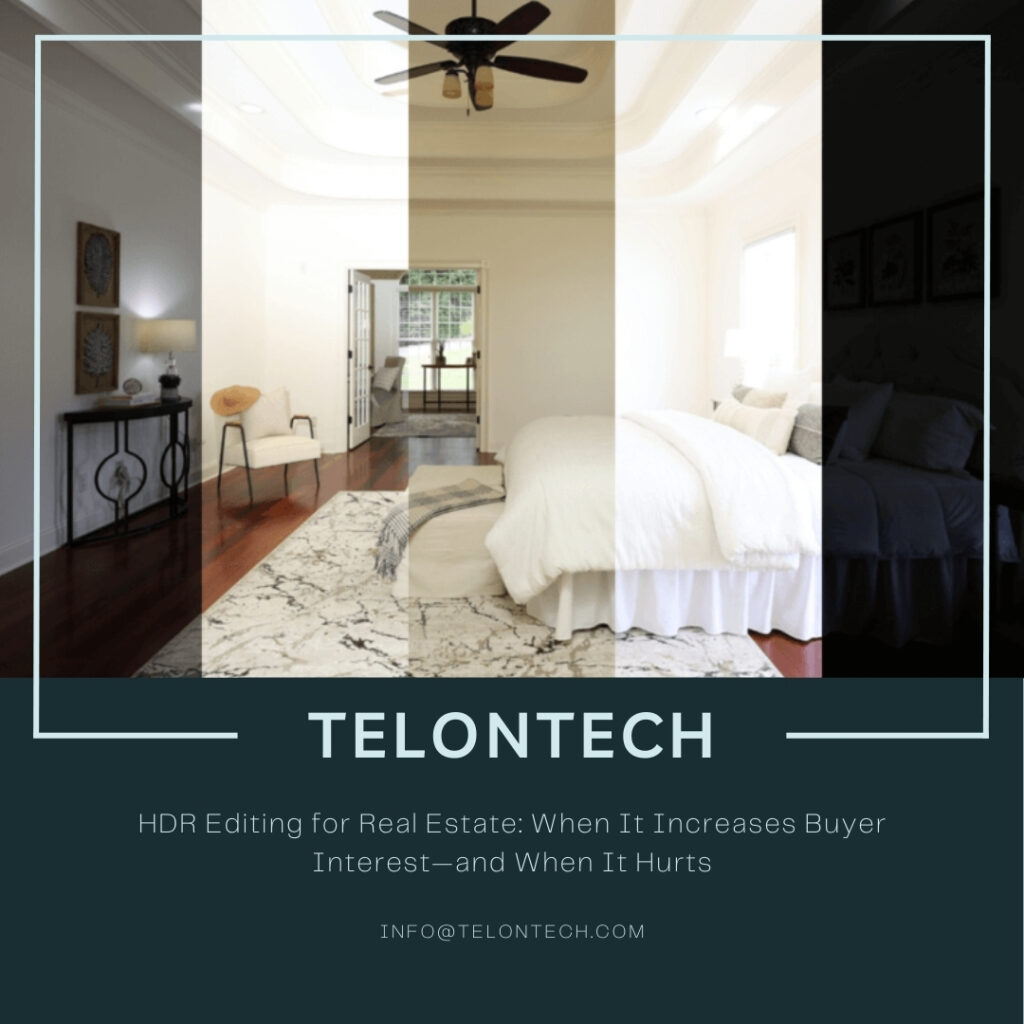
This guide explores the nuanced role of HDR in real estate photography, offering insights, practical tips, and clear examples to help you leverage HDR effectively while avoiding common pitfalls.
Understanding HDR in Real Estate Photography
High Dynamic Range photography involves combining multiple exposures of the same scene to capture a wide range of light, from deep shadows to bright highlights. In real estate, HDR ensures that rooms photographed under uneven lighting—like bright windows and dark corners—appear balanced and natural.
Without Property HDR Photo Editing, a single exposure may underexpose some areas or overexpose others. For example, a sunlit living room may wash out the view outside, while shadowy corners disappear into darkness. HDR addresses these issues by blending exposures, producing a more realistic and visually appealing image.
Nevertheless, HDR is not a magic fix. Poor execution or excessive enhancement can result in surreal, overly saturated images that distract buyers rather than attract them. Understanding the difference between enhancing reality and exaggerating it is critical.
When HDR Editing Boosts Buyer Interest
HDR can significantly influence buyer engagement when used with precision. Here are some scenarios where HDR editing works best:
1. Highlighting Architectural Details
HDR allows subtle details like crown molding, textured walls, or intricate flooring patterns to stand out without creating harsh shadows. Highlighting these features can increase perceived value and appeal.
2. Balancing Indoor and Outdoor Light
A living room with large windows can be challenging to photograph. HDR ensures the view outside is visible while keeping interior lighting natural, providing a welcoming and airy feel.
3. Improving Dimly Lit Spaces
Basements, hallways, and older homes often lack sufficient natural light. HDR can brighten these areas without making them look artificial, helping buyers see the property clearly.
4. Creating Consistency Across Listings
A consistent style in HDR-edited photos across a property portfolio builds professional branding and trust. Buyers notice when images feel polished and uniform.
When HDR Editing Can Hurt Buyer Trust
Despite its advantages, HDR can backfire if applied incorrectly. Overuse can make rooms look artificial, causing skepticism among potential buyers.
1. Over-Saturated Colors
Excessively bright or unnaturally vivid colors can make spaces appear unrealistic. For instance, overly green lawns or exaggerated blue skies may trigger doubt.
2. Halo Effects Around Objects
HDR blending sometimes produces halos—light fringes around objects. Buyers may subconsciously feel something is off, reducing their confidence in the listing.
3. Unrealistic Lighting
Brightening every corner excessively can flatten shadows and make rooms lose depth, creating a “plastic” look. Realistic lighting cues help buyers gauge space accurately.
4. Misrepresenting Property Size or Layout
Over-enhanced HDR images can exaggerate space, making rooms appear larger than they are. Misrepresentation can lead to disappointment during in-person visits.
Best Practices for Effective HDR Editing in Real Estate
To maximize HDR benefits while maintaining credibility, follow these best practices:
1. Shoot Multiple Exposures Carefully
Use a tripod to maintain alignment and capture 3-5 exposures of the same scene. Proper framing ensures smooth HDR blending.
2. Prioritize Natural Colors
Adjust vibrancy and saturation subtly. The goal is to enhance reality, not create fantasy images.
3. Limit Over-Processing
Avoid excessive sharpening, halos, or unnatural lighting. A subtle, realistic HDR effect works best.
4. Use Professional Software
Editing tools like Adobe Lightroom, Photoshop, or Aurora HDR provide precise control over exposure, contrast, and color balance.
Comparing HDR to Standard Editing
Standard photo editing involves adjusting exposure, contrast, and color in a single shot. While simpler, it often fails to capture extreme lighting scenarios.
HDR provides a wider tonal range, preserving detail in both highlights and shadows. For example, a sunset-lit living room can retain outdoor views while showing cozy indoor lighting. Standard editing might blow out either the window or the interior.
However, simplicity sometimes wins. For bright, well-lit spaces, standard editing can suffice and prevent the artificial look that overused HDR may create.
HDR in Marketing Materials: Listings, Flyers, and Social Media
High-quality HDR images elevate property marketing. On online listings, these images attract more clicks, engagement, and inquiries.
In printed flyers, HDR images provide consistent brightness and clarity. On social media, visually appealing HDR images stand out, capturing the attention of potential buyers scrolling quickly through feeds.
Yet, ensure HDR images align with reality. Misleading visuals can harm your professional reputation and reduce word-of-mouth referrals.
Case Studies: HDR Done Right
Case Study 1: Urban Apartment
A downtown apartment had floor-to-ceiling windows but a narrow interior. HDR balanced the bright cityscape with interior details, creating a spacious, inviting feel. The property received 40% more inquiries compared to non-HDR photos.
Case Study 2: Suburban Family Home
A family home with a shaded backyard struggled to show outdoor appeal. HDR enhanced shadows and highlights naturally, showing both deck and garden clearly. The listing generated strong engagement and faster sale.
Case Study 3: Misused HDR Example
An overprocessed loft had neon-bright walls and floating shadows, making rooms appear artificial. Buyers reported disappointment, reducing trust in the agent. This example demonstrates the importance of moderation.
Choosing the Right HDR Style for Your Property
Not all properties benefit equally from HDR. Consider these factors:
- Lighting Conditions: Dimly lit or high-contrast rooms benefit most.
- Property Type: Luxury homes often require polished HDR, while modest homes benefit from natural enhancements.
- Audience Expectations: Buyers seeking authenticity prefer subtle HDR over dramatic effects.
Choosing the right style ensures buyers feel confident and engaged.
Integrating Property HDR Photo Editing Techniques
HDR works best when combined with complementary techniques:
- Wide-Angle Lenses: Capture full rooms without distortion.
- Virtual Staging: Enhances empty rooms with realistic furniture.
- Twilight Photography: HDR balances indoor lights with dusk exterior lighting, creating a dramatic effect.
Integration enhances overall listing quality, improving buyer perception.
Common Mistakes in HDR Real Estate Photography
Avoiding common HDR pitfalls is crucial for maintaining credibility:
- Over-editing shadows or highlights
- Ignoring color accuracy
- Using inconsistent HDR styles across rooms
- Failing to consider buyer perception
Even subtle missteps can make images feel unnatural, reducing inquiries.
Tools and Software Recommendations for HDR Editing
Professional HDR editing requires precise tools:
- Adobe Lightroom: Advanced exposure and color correction
- Photoshop: Layer-based blending and fine-tuning
- Aurora HDR: Specialized HDR software for natural results
- Photomatix Pro: Popular among real estate photographers
Choosing the right software ensures both efficiency and image quality.
Workflow Tips for Efficient HDR Editing
Efficiency matters for real estate professionals handling multiple listings:
- Batch process similar images to save time
- Use presets for consistent style across listings
- Regularly calibrate monitors to maintain accurate color
- Always compare edited images to originals for realism
A well-planned workflow reduces errors and maintains professionalism.
Measuring the Impact of HDR on Buyer Engagement
Track engagement to evaluate HDR effectiveness:
- Click-through rates on online listings
- Time spent viewing images
- Inquiry volume after listing publication
- Feedback from showings
Data-driven insights help refine editing approaches and ensure ROI.
Emerging HDR Trends in Real Estate Photography
Real estate photography evolves alongside technology, and HDR is no exception. Modern HDR techniques now integrate AI and machine learning to automatically balance exposures, correct colors, and remove imperfections. AI-powered HDR editing reduces manual work while maintaining realistic results. For agents and photographers, staying updated on these trends ensures listings remain competitive and visually appealing.
Another trend is dynamic HDR for virtual tours. As 3D walkthroughs gain popularity, HDR imagery enhances lighting consistency, creating smoother and more immersive experiences for prospective buyers. These technological advances make HDR an essential skill for forward-thinking professionals.
HDR in Mobile Real Estate Photography
Mobile photography is becoming increasingly important in real estate marketing. Many agents now rely on smartphones for quick listing updates. Advanced mobile HDR technology allows photographers to capture balanced images without professional cameras. While smartphone HDR may not replace professional gear for high-end listings, it is invaluable for smaller properties or time-sensitive updates.
Optimizing HDR on mobile requires attention to composition, lighting, and post-processing apps. Even subtle improvements can make a significant difference in buyer engagement, especially on social media and listing platforms.
Balancing HDR and Virtual Staging
Virtual staging and HDR editing complement each other beautifully but can also conflict if overdone. HDR enhances lighting and detail, while virtual staging adds furniture and décor to empty rooms. Combining the two creates visually compelling, realistic images that attract buyers.
However, over-enhancing HDR in staged rooms may produce an unnatural effect. Photographers must carefully calibrate lighting and exposure to maintain realism while making spaces inviting. Proper integration increases both inquiry rates and trust.
Psychological Impact of HDR on Buyers
Visual perception plays a major role in real estate decision-making. HDR images subtly guide buyer attention, emphasizing desirable features like spaciousness, natural light, or architectural details. Balanced HDR can make rooms feel larger, warmer, and more welcoming.
Conversely, overly processed HDR may trigger skepticism. Buyers are quick to detect unnatural lighting or colors, which can reduce perceived authenticity. Understanding the psychology behind HDR use helps photographers and agents craft images that encourage positive emotional responses without misrepresenting the property.
HDR and Seasonal Lighting Challenges
Lighting conditions vary throughout the year, and HDR is particularly useful for handling seasonal challenges. Winter months often bring dimmer sunlight, while summer can create harsh contrasts. HDR ensures interior and exterior elements remain balanced regardless of natural light conditions.
For properties with large windows, HDR helps showcase scenic views without overexposing indoor spaces. Agents can maintain consistent image quality year-round, keeping listings visually competitive and reducing the need for multiple reshoots.
HDR for Commercial Real Estate Listings
While residential real estate is often the focus of HDR discussions, commercial properties also benefit. Office spaces, retail units, and industrial buildings often feature complex lighting environments. HDR balances these spaces, highlighting ceiling heights, workspaces, and large windows, while keeping details clear and engaging.
For commercial clients, professional HDR images convey a polished brand image. Well-executed HDR can help businesses attract tenants faster and build trust with potential clients.
The Ethics of HDR in Real Estate Marketing
Ethics play a critical role in HDR use. Over-editing images or exaggerating property features may lead to complaints, negative reviews, or legal consequences. Professionalism requires accurate representation of size, light, and layout.
Transparency is key. Agents can disclose minor image enhancements or provide additional photos for context. Ethical Property HDR Photo Editing strengthens credibility, improves buyer trust, and ultimately facilitates smoother sales.
Training and Skill Development for HDR Editing
Mastering HDR requires more than software knowledge—it requires an eye for detail, lighting, and composition. Many photographers pursue specialized courses in real estate HDR, learning to balance exposure, maintain realism, and avoid common mistakes.
Continuous practice, reviewing industry trends, and analyzing high-performing listings help professionals refine their HDR skills. For agents investing in photography training, understanding HDR can improve listing quality and increase overall ROI.
Conclusion: Balancing Reality and Visual Appeal
Property HDR Photo Editing is a powerful tool that can significantly enhance real estate listings when used judiciously. By highlighting architectural details, balancing light, and improving image consistency, HDR attracts buyers and elevates perceived property value.
However, overuse or misapplication can backfire. Unrealistic lighting, exaggerated colors, or distorted spaces erode trust, ultimately hurting sales. The key lies in subtlety, professionalism, and alignment with reality.
For real estate professionals, understanding when HDR increases buyer interest—and when it hurts—is essential for creating compelling, trustworthy listings that close deals efficiently. When balanced correctly, HDR editing becomes not just a technical skill, but a strategic marketing advantage.