Introduction
In the modern real estate industry, buyers rarely begin their journey by visiting properties in person. Instead, they start by browsing online listings on platforms such as Zillow, Realtor.com, Redfin, LoopNet, and even social media channels like Instagram and Facebook Marketplace. Because of this digital shift, the quality of property images has become one of the most influential factors in attracting attention. A potential buyer may spend only a few seconds on each listing, which means the visual presentation must communicate value instantly. Therefore, understanding Real Estate Photo Editing Cost is no longer just a technical question; it has become a strategic business concern for agents, brokers, photographers, developers, and property owners.
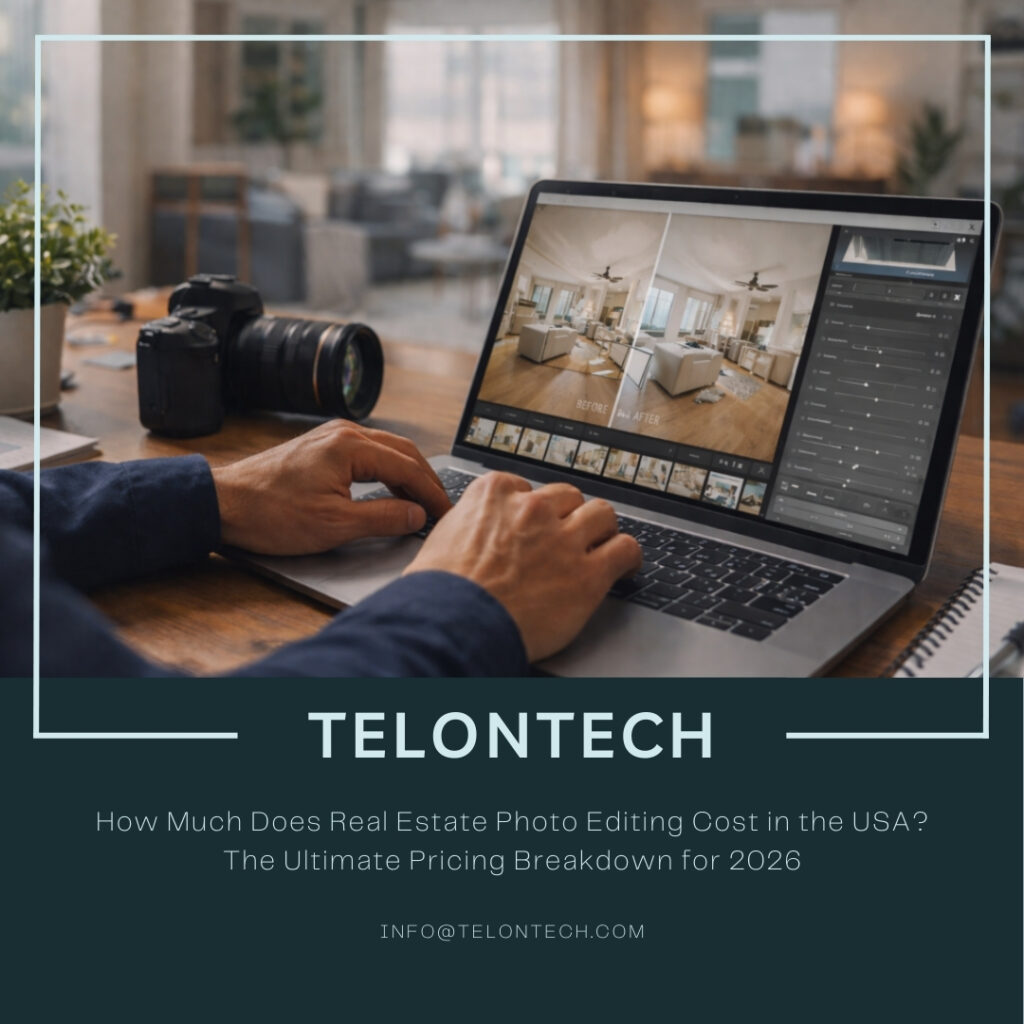
Moreover, real estate photo editing is not simply about making images look prettier. It involves correcting lighting issues, adjusting colors, fixing perspective problems, removing distractions, enhancing outdoor features, and even digitally staging empty rooms. All these techniques aim to present the property in the most appealing yet realistic way. As competition increases across local and national markets, professionally edited images often make the difference between a listing that gets ignored and one that generates multiple inquiries within hours. Therefore, investing in the right editing services directly impacts sales speed, lead quality, and overall brand reputation.
Understanding Real Estate Photo Editing and Its Real Value
Real estate photo editing refers to the professional process of enhancing raw property photographs so they appear brighter, cleaner, more balanced, and visually persuasive. This process typically includes exposure correction, white balance, contrast adjustment, vertical alignment, sky replacement, grass enhancement, object removal, window masking, and sometimes virtual staging. Each technique serves a specific purpose, but the ultimate goal remains the same: to help potential buyers imagine themselves living or working in that space.
From a psychological perspective, edited images influence buyer emotions more than most people realize. Bright rooms feel larger, clean exteriors feel safer, and warm lighting creates a sense of comfort. Because of this, the perceived value of a property often increases when professional editing is applied. As a result, Real Estate Photo Editing Cost should be viewed as a marketing investment rather than an operational expense. Instead of asking how cheap the service is, professionals should ask how much additional value it generates through higher engagement, faster decisions, and stronger brand trust.
Average Real Estate Photo Editing Cost in the USA
When professionals ask about Real Estate Photo Editing Cost, they usually expect a simple number. However, the reality is more complex because prices vary widely depending on service level, turnaround time, and provider expertise. On average, editing costs range from $0.50 to $10 per image, with premium services going even higher for luxury projects. While this range seems broad, it reflects the diverse needs of the real estate market, from small rental listings to multimillion-dollar commercial developments.
In practical terms, most residential listings fall within the $2 to $5 per image range for standard editing. Photographers who work with agencies or outsourcing firms often receive lower rates due to volume discounts, whereas individual agents working with freelancers may pay higher prices for personalized service. Therefore, instead of focusing on exact numbers, it is more useful to understand which editing category fits your business goals. A low-budget rental listing does not require the same visual treatment as a luxury waterfront villa, even though both technically fall under real estate photography.
Basic Real Estate Photo Editing Costs
Basic real estate photo editing includes fundamental adjustments such as brightness correction, contrast improvement, white balance, mild sharpening, and simple cropping. These services aim to correct technical flaws without changing the structure or content of the image. In most cases, basic editing improves clarity and consistency across a listing gallery, making the photos look more professional than raw camera output.
In the USA, basic editing typically costs between $0.50 and $2 per image, especially when outsourced to large editing companies. This pricing works well for high-volume photographers who need quick results and minimal customization. However, basic editing does not include advanced features like sky replacement, object removal, or dramatic lighting adjustments. Therefore, while it keeps costs low, it may not produce strong emotional impact. Basic editing is best suited for rental listings, budget properties, internal documentation, and situations where speed matters more than visual storytelling.
Standard Real Estate Photo Editing Costs
Standard real estate photo editing represents the most popular choice among realtors and property marketers because it balances affordability with strong visual quality. This level includes exposure balancing, color correction, perspective correction, sharpening, noise reduction, and sometimes sky replacement or window masking. The goal is to create images that look polished, bright, and natural without appearing over-processed.
In the USA, standard editing usually costs between $2 and $5 per image, depending on the service provider and order volume. This pricing level suits most residential sales listings, including houses, apartments, condominiums, and small commercial properties. Since standard editing improves both technical accuracy and emotional appeal, it often generates higher engagement on listing platforms. As a result, many agents consider standard editing the minimum acceptable level for serious property marketing.
Advanced Real Estate Photo Editing Costs
Advanced real estate photo editing involves complex retouching techniques that go beyond basic corrections. These services include object removal, advanced sky replacement, HDR blending, reflection control, lawn enhancement, virtual lighting, and sometimes manual shadow adjustments. Each image may require significant human intervention, which increases both time and cost.
In the USA, advanced editing typically costs between $5 and $10 or more per image, depending on complexity. Luxury properties often require this level because buyers expect perfection. Even small visual distractions, such as power lines, trash bins, or uneven lighting, can reduce perceived value. Therefore, advanced editing plays a critical role in high-end marketing campaigns, architectural portfolios, and premium real estate brands that focus on image quality as part of their identity.
Virtual Staging Pricing in the USA
Virtual staging is one of the most powerful tools in modern property marketing. It involves digitally placing furniture, décor, artwork, and lighting into empty rooms. This helps buyers understand room scale, layout, and functionality without the high cost of physical staging. Virtual staging also allows agents to target different buyer demographics by changing interior styles.
In the USA, virtual staging costs between $20 and $50 per image, depending on realism and customization. Some providers charge per room, while others offer package pricing for full properties. Although virtual staging costs more than standard editing, it delivers exceptional value because it transforms empty spaces into emotionally engaging environments. As a result, many agents use virtual staging specifically for vacant homes, new constructions, and investment properties where physical furniture is not available.
Day-to-Dusk Real Estate Photo Editing Costs
Day-to-dusk editing converts daytime photos into evening scenes by adding warm lighting, glowing windows, and sunset skies. This technique creates a dramatic and luxurious feel, which appeals strongly to emotional buyers. Evening images often perform well as featured listing photos because they stand out visually among typical daylight images.
In the USA, day-to-dusk editing costs between $4 and $15 per image, depending on realism and lighting complexity. High-quality conversions require manual masking and lighting simulation, which explains the higher price range. Although not necessary for every listing, day-to-dusk images add strong visual differentiation for luxury properties, waterfront homes, and architectural designs.
Floor Plan Editing and Rendering Costs
Floor plan editing involves creating 2D or 3D layouts that visually explain property structure. These layouts help buyers understand room relationships, dimensions, and flow, which reduces uncertainty and builds trust. Many buyers prefer listings with floor plans because they offer transparency.
In the USA, 2D floor plans usually cost $10 to $25, while 3D floor plans range from $25 to $40 or more. Although floor plans are not strictly photo editing, they form part of the broader visual marketing package. Therefore, including them alongside edited photos increases listing professionalism and buyer confidence.
Key Factors That Influence Real Estate Photo Editing Cost in the USA
Several variables influence real estate photo editing cost in the USA, and understanding them helps professionals plan budgets accurately. Image complexity plays a major role because cluttered or poorly lit photos require more manual work. Volume also affects pricing, since bulk orders receive discounts. Turnaround time influences cost as well, because express delivery requires editors to prioritize urgent tasks.
Additionally, provider location impacts pricing significantly. US-based editors charge higher rates than offshore companies due to labor costs. Custom branding requirements, such as logos, watermarks, and specific style guides, also increase editing time. Therefore, pricing reflects not just the service itself but also the workflow, communication, and level of personalization involved.
Freelancers vs Editing Agencies
Freelancers typically charge between $3 and $10 per image, depending on experience and workload. They offer personalized communication and creative flexibility. However, they may struggle with large volumes or tight deadlines.
Editing agencies usually charge between $1 and $5 per image for standard services. They provide scalability, consistent quality, and faster turnaround times. For high-volume operations, agencies offer better cost-efficiency and reliability.
In-House Editing vs Outsourcing
In-house editing requires software subscriptions, trained staff, hardware, and ongoing salaries. Monthly costs often exceed $2,000 to $4,000, even for small teams. Outsourcing, on the other hand, allows businesses to pay only for what they need.
Because of this, most real estate professionals outsource editing. Outsourcing reduces operational costs, improves scalability, and ensures access to specialized skills without long-term commitments.
Hidden Costs to Watch Out For
Some providers charge extra for revisions, rush delivery, file format changes, branding overlays, or storage. These hidden costs increase overall spending if not clarified in advance. Therefore, always review pricing policies carefully before choosing a provider.
How Much Should Realtors Budget Monthly?
On average, realtors spend $50 to $300 per month on editing. High-volume agents may spend $500 or more, especially when using advanced services. However, this investment often results in higher commissions and faster deals.
How Turnaround Time Affects Real Estate Photo Editing Cost in the USA
Turnaround time plays a critical role in determining real estate photo editing cost in the USA, yet many professionals underestimate its impact. In real estate, speed often means opportunity. Agents frequently work under tight deadlines because listings must go live quickly to capture buyer interest. Therefore, editing services that offer 6-hour or 12-hour delivery usually charge more than those with 24-hour or 48-hour timelines. This price difference exists because editors must prioritize urgent tasks, allocate additional resources, and sometimes work outside normal schedules to meet deadlines.
From a business perspective, faster turnaround often delivers higher value even if it costs more. When a property goes live sooner, it starts generating inquiries earlier. In competitive markets, even a few hours can influence buyer behavior. As a result, many realtors willingly pay extra for express editing because the opportunity cost of delay is far greater than the editing fee itself. Thus, turnaround time becomes not just a technical factor, but a strategic pricing variable that directly influences revenue potential.
The Role of Image Quality in Editing Costs
The quality of the original photographs strongly affects real estate photo editing cost in the USA. High-quality images captured with professional cameras, proper lighting, and correct angles require less editing effort. In contrast, poorly lit, blurry, or distorted photos demand more manual correction, which increases time and cost. Therefore, editing does not exist in isolation; it depends heavily on the photographer’s skill.
When agents work with professional photographers, editing costs usually remain within standard ranges. However, when photos come from smartphones or inexperienced shooters, editors must spend extra time fixing exposure, color balance, and perspective issues. This additional labor increases pricing. Consequently, investing in good photography reduces long-term editing costs while improving overall marketing quality.
How Property Type Influences Editing Pricing
Property type also plays a major role in determining real estate photo editing cost in the USA. Residential homes typically require standard editing, while commercial properties often need more detailed retouching. For example, hotels, office buildings, shopping centers, and industrial facilities involve complex lighting, wide-angle distortions, and large-scale environments that demand advanced correction techniques.
Luxury properties introduce another pricing layer. High-end homes usually require perfection because buyers expect premium visuals. Even minor imperfections become unacceptable in this segment. Therefore, editors spend more time refining every detail, which increases cost. On the other hand, budget rentals and student housing usually require only basic enhancement, keeping expenses low. Thus, the type of property directly shapes both editing strategy and budget allocation.
Subscription-Based Pricing Models
Many editing companies now offer subscription packages instead of per-image pricing. These models significantly affect Real Estate Photo Editing Cost, especially for high-volume professionals. Under subscription plans, agents pay a fixed monthly fee for a certain number of images or projects. This approach stabilizes expenses and simplifies budgeting.
Subscription models benefit photographers, agencies, and large brokerages because they reduce per-image costs while guaranteeing consistent service. Editors also prefer subscriptions because they ensure steady workflow. As a result, this pricing structure creates a win-win situation where both sides gain financial predictability and operational efficiency.
Regional Cost Differences Across the USA
Although national averages exist, real estate photo editing cost in the USA varies by region. In major metropolitan areas like New York, Los Angeles, San Francisco, and Chicago, local editors charge significantly higher rates due to labor costs and market demand. In contrast, agents in smaller cities often outsource editing to international companies, reducing expenses.
Regional competition also affects pricing. In highly competitive markets, agents invest more in visual quality, which increases demand for premium editing. In slower markets, cost sensitivity remains higher, which pushes professionals toward budget-friendly options. Therefore, geographic location indirectly shapes editing standards and pricing expectations.
Branding and Consistency Costs
Brand-focused agents often maintain a consistent visual style across all listings. This branding approach increases real estate photo editing cost in the USA because it requires customized presets, manual style matching, and strict quality control. Editors must follow specific color tones, lighting moods, and framing rules.
Although branding increases editing time, it strengthens professional identity. Over time, buyers begin recognizing listings based on visual style alone. This brand recognition improves trust and recall, which delivers long-term business value. Therefore, branding costs should be viewed as marketing investments rather than unnecessary expenses.
How Editing Impacts Buyer Decision-Making
Real estate photo editing influences buyer psychology more than most professionals realize. Bright images trigger positive emotions, clean spaces reduce mental friction, and well-lit rooms create comfort. These emotional responses directly affect purchasing decisions. Therefore, real estate photo editing cost in the USA must be evaluated through behavioral economics, not just accounting.
When buyers feel emotionally connected to a property, they spend more time viewing it, share it with family, and schedule visits sooner. This emotional engagement increases competition and perceived value. As a result, professional editing indirectly supports higher offers and faster negotiations.
Editing Costs vs Marketing Budget Allocation
Many agents allocate thousands of dollars to ads, promotions, and lead generation but hesitate to spend a few hundred dollars on editing. This mindset creates imbalance. Without strong visuals, even expensive ads perform poorly. Therefore, real estate photo editing cost in the USA should represent a core component of the marketing budget, not an afterthought.
When images perform well, every marketing channel becomes more effective. Listings receive more clicks, ads convert better, and social media engagement increases. Thus, editing acts as a multiplier for all other marketing investments.
Long-Term Business Impact of Editing Quality
Over time, consistent editing quality shapes professional reputation. Agents known for clean, attractive listings gain more referrals, stronger online presence, and better client trust. This long-term impact far exceeds the short-term cost of editing. Therefore, evaluating real estate photo editing cost in the USA requires a strategic mindset that considers brand equity, not just immediate expenses.
High-quality visuals signal professionalism. Clients associate visual quality with service quality. As a result, agents who invest in editing often attract higher-value clients and premium listings. This creates a positive feedback loop where quality leads to growth, and growth justifies further investment in quality.
Final Conclusion
So, how much does Real Estate Photo Editing Cost? The realistic answer ranges from $0.50 to $10 per image, with premium services costing more. However, focusing only on price misses the bigger picture. Real estate photo editing is a powerful marketing tool that shapes buyer perception, brand identity, and sales performance. When used strategically, it does not just improve images—it improves business outcomes.