Introduction: Why Sky Replacement Matters More Than Ever in Real Estate Marketing
In today’s digital-first real estate market, buyers judge a property in seconds. Most home searches start online, and listing photos shape first impressions instantly. Because of this, realtors invest heavily in professional photography, editing, and visual presentation. One popular technique is Sky Replacement MLS Rules, which enhances dull or overcast skies with brighter, more appealing ones.
However, while sky replacement improves visual appeal, it also raises serious questions about ethics and compliance. U.S. MLS platforms enforce strict rules about photo accuracy. If edits mislead buyers, agents risk penalties, listing removal, or even license issues. Therefore, understanding what’s acceptable on U.S. MLS is essential for every real estate professional.
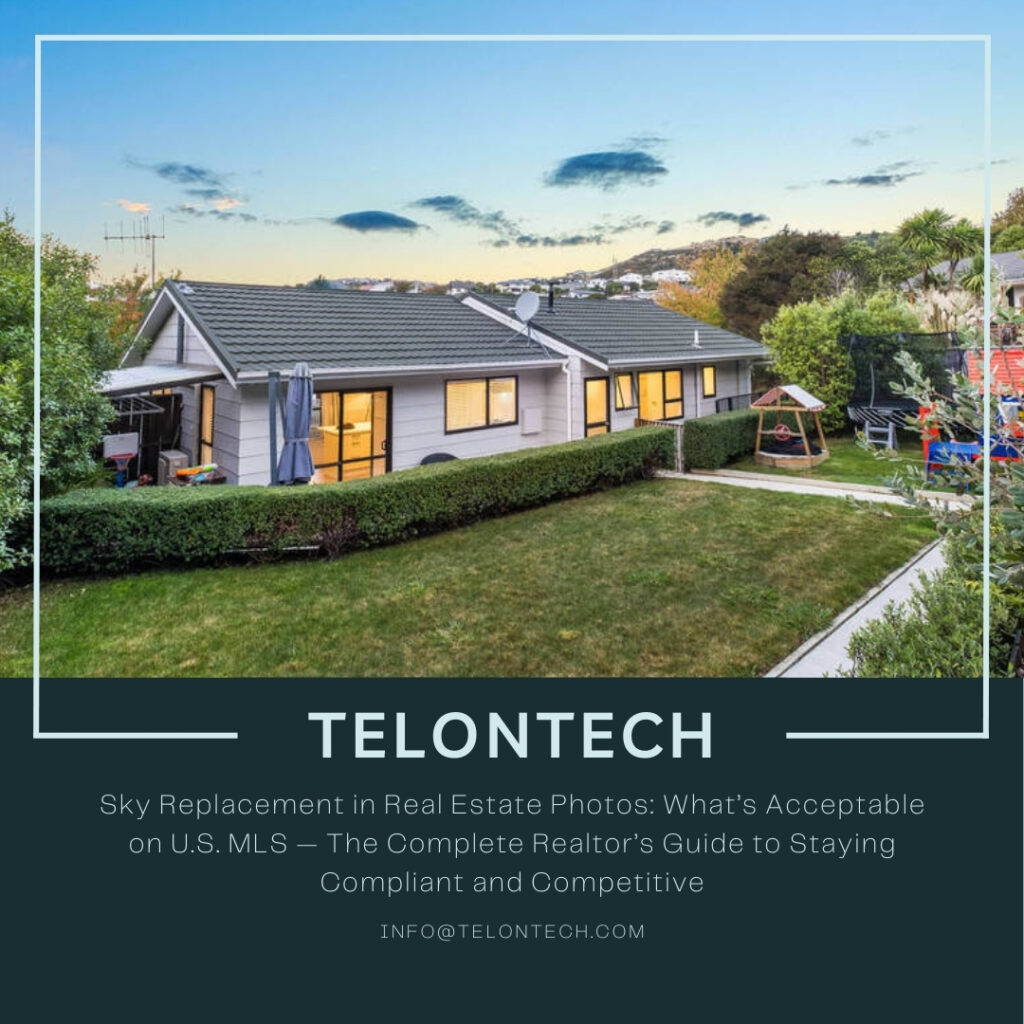
This guide explains everything you need to know about sky replacement in real estate photos, including legal boundaries, ethical practices, MLS rules, and best editing standards.
Understanding Sky Replacement in Real Estate Photography
Sky replacement in real estate photos refers to digitally removing the original sky and replacing it with a new one. Editors usually insert blue skies, light clouds, or sunset effects to make images more attractive. This technique has become standard in real estate marketing because weather conditions rarely cooperate with photo schedules.
However, Sky Replacement MLS Rules must improve aesthetics without altering reality. Editors should never manipulate lighting directions, reflections, or weather conditions in ways that misrepresent the property. Instead, they should create natural-looking enhancements that maintain visual honesty.
When done correctly, sky replacement improves emotional appeal without misleading buyers. When done incorrectly, it creates false expectations and damages professional credibility.
Why Realtors Use Sky Replacement So Frequently
Real estate photography depends on timing, light, and weather. Unfortunately, agents cannot always wait for perfect conditions. Overcast skies, storms, or dull lighting reduce visual impact significantly.
Sky replacement helps overcome these limitations. It allows realtors to present properties attractively, even when conditions are poor. It also ensures consistency across listings, especially for large portfolios.
Moreover, studies show that listings with bright skies receive higher click-through rates and longer viewing times. As a result, many agents consider sky replacement essential for competitive marketing.
What U.S. MLS Rules Say About Photo Editing
Most U.S. MLS platforms allow photo editing, including sky replacement, under specific conditions. However, they prohibit deceptive manipulation. The general rule states that images must represent the property accurately.
MLS guidelines allow cosmetic improvements but forbid structural changes. You may enhance skies, adjust brightness, and correct colors. However, you may not remove buildings, add landscaping, or hide flaws.
Sky replacement remains acceptable only if it does not change factual elements. The sky must look natural and reflect realistic lighting.
Acceptable Sky Replacement MLS Rules
Sky replacement is acceptable when it follows ethical standards. First, the sky must match the lighting of the original image. Shadows, reflections, and sun angles must remain consistent.
Second, the sky should not imply features that do not exist. For example, adding sunset skies when the property faces east may mislead buyers.
Third, skies should enhance, not dominate. Overly dramatic skies distract viewers and raise suspicion. Therefore, subtle enhancements remain safest.
Unacceptable Sky Replacement That Violates MLS Rules
Certain sky replacement practices violate MLS policies. Adding stormy skies, fireworks, or unrealistic sunsets misrepresents reality. Likewise, inserting skies that alter property mood significantly may trigger compliance issues.
Also, changing seasonal appearance is not allowed. You cannot replace winter skies with summer skies if trees show snow. This creates false impressions about climate and environment.
Most importantly, any edit that misleads buyers about location, view, or surroundings violates MLS standards.
Legal and Ethical Risks of Improper Sky Replacement
Improper editing creates serious legal risks. Buyers may claim misrepresentation if photos differ from reality. This can result in lawsuits, commission disputes, and disciplinary action.
Ethically, misleading images damage trust. Real estate relies on credibility. Once buyers feel deceived, reputation suffers permanently. Therefore, responsible sky replacement protects both legal safety and professional integrity.
How Sky Replacement Impacts Buyer Psychology
Buyers make emotional decisions quickly. Bright skies signal positivity, safety, and lifestyle quality. As a result, sky replacement influences perception strongly.
However, unrealistic skies create disappointment during physical visits. When buyers feel misled, emotional connection breaks instantly. Therefore, realistic sky replacement maintains emotional engagement without false expectations.
Best Practices for Sky Replacement in Real Estate Photos
The safest approach follows three rules: realism, consistency, and subtlety.
Use skies that match original lighting. Avoid dramatic effects. Maintain natural cloud patterns. Also, apply consistent skies across multiple photos to avoid visual mismatch.
Furthermore, disclose editing practices if necessary. Transparency builds trust and protects credibility.
Professional Editing vs DIY Sky Replacement
Many agents attempt DIY editing using apps. However, amateur edits often look artificial. Poor blending, mismatched lighting, and visible edges reduce professionalism.
Professional editors understand lighting physics, reflections, and natural composition. They ensure seamless integration without altering property facts. Therefore, outsourcing remains the safest option.
Sky Replacement and Virtual Staging Differences
Sky Replacement MLS Rules enhances existing elements. Virtual staging adds furniture and decor. Both techniques are allowed but follow different rules.
Sky replacement remains less risky because it does not alter structure. Virtual staging requires disclosure. However, both must avoid deception and maintain realism.
How MLS Compliance Teams Review Images
MLS compliance teams review listings using both automated tools and manual inspections. They look for unrealistic edits, inconsistent lighting, and misleading elements.
If violations appear, they issue warnings, remove images, or suspend accounts. Therefore, compliance depends on consistent ethical practices.
Creating a Compliance Checklist for Realtors
Before uploading images, ask these questions:
Does the sky match lighting?
Does it look realistic?
Does it change property facts?
Would buyers feel misled?
If any answer raises doubt, revise the image.
The Future of Sky Replacement in Real Estate
AI-powered editing tools now automate sky replacement. These tools create realistic skies quickly. However, AI also increases risk because automated results may ignore MLS rules.
Therefore, human review remains essential. Technology should assist, not replace, ethical judgment.
The Role of Brokerages in Regulating Sky Replacement Standards
While MLS platforms enforce general compliance rules, brokerages also play a critical role in regulating sky replacement in real estate photos. Many large brokerages now publish internal media policies that go beyond MLS requirements. These internal standards exist because brokerages want to protect brand trust and reduce legal exposure. As a result, agents often must follow stricter guidelines than what MLS technically allows.
For example, some brokerages require that all Sky Replacement MLS Rules must use neutral blue skies only. They prohibit sunset effects, dramatic clouds, or stylized lighting. This ensures consistency across listings and avoids buyer confusion. Moreover, internal review teams frequently inspect images before publication. This extra layer of approval significantly reduces compliance risks and improves overall content quality.
How Appraisers View Edited Real Estate Photos
Appraisers do not rely on listing photos for valuation, but they still observe them during property analysis. If edited images appear misleading, appraisers may flag listings as potentially deceptive. This can delay financing and create unnecessary complications for buyers and sellers.
Sky replacement itself does not directly impact property value. However, unrealistic visuals may influence buyer expectations. When appraisers visit the property and see major differences between photos and reality, they often question listing credibility. Therefore, accurate sky replacement protects transaction efficiency and avoids friction in closing processes.
The Relationship Between Sky Replacement and Fair Housing Laws
Although Sky Replacement MLS Rules seems unrelated to fair housing, poor editing can accidentally create legal issues. If sky replacement removes environmental elements such as nearby buildings, power lines, or infrastructure, it may misrepresent the neighborhood. This creates indirect violations of fair housing transparency.
For instance, removing visible urban density through editing could mislead buyers about community type. Therefore, editors must ensure that sky replacement never hides real surroundings. Transparency supports equal access to information and reduces legal risk.
How Buyers Detect Fake or Over-Edited Skies
Modern buyers have high visual literacy. They quickly recognize unnatural edits, especially when shadows do not match cloud patterns or reflections look inconsistent. Over-processed skies trigger skepticism almost instantly.
When buyers feel suspicious, they often disengage emotionally. They may still schedule visits, but trust weakens before the showing even happens. This proves that excessive sky replacement damages conversion rates instead of improving them. Realism always performs better than artificial perfection.
Sky Replacement in Luxury vs Entry-Level Listings
Sky replacement strategies differ between market segments. Luxury listings often use softer skies with premium lighting tones. These create emotional storytelling without exaggeration. Entry-level listings typically use simple blue skies to maintain clarity and honesty.
However, both segments require the same ethical foundation. Luxury marketing cannot justify misleading visuals. In fact, high-end buyers expect higher authenticity. Therefore, subtlety becomes even more important in premium markets.
Training Real Estate Teams on Photo Ethics
Top-performing real estate teams now include photo ethics in training programs. They educate agents about acceptable editing boundaries, MLS compliance, and buyer psychology. This training prevents accidental violations and strengthens brand credibility.
Teams that understand editing ethics avoid repeated compliance issues. They also maintain consistent visual identity across listings. Over time, this creates stronger buyer trust and better long-term reputation.
How Sky Replacement Affects Long-Term Brand Perception
Brand perception depends on consistency and honesty. When buyers repeatedly see accurate photos from a brokerage, they develop trust. However, when images feel manipulated, credibility declines quickly.
Sky replacement should support brand identity, not distort it. Ethical editing reinforces professionalism and signals reliability. Over time, honest visuals outperform exaggerated marketing in both lead quality and conversion rates.
The Psychological Line Between Enhancement and Deception
Enhancement improves clarity. Deception alters reality. Sky replacement sits directly on this psychological line. Realtors must ask whether the edit simply improves mood or actively changes perception.
If an edit hides flaws, changes lighting direction, or suggests features that do not exist, it crosses into deception. Ethical sky replacement improves emotional response without altering factual understanding.
The Competitive Advantage of Ethical Photo Editing
In highly competitive markets, many agents rely on heavy editing to stand out. However, ethical editing creates a stronger competitive advantage long-term. Buyers prefer agents who deliver honest experiences.
Listings with realistic images generate fewer cancellations, smoother negotiations, and faster closings. Therefore, ethical sky replacement does not reduce competitiveness. Instead, it increases transaction quality and client satisfaction.
Why Subtle Skies Convert Better Than Dramatic Ones
Marketing data consistently shows that subtle visuals outperform dramatic visuals in real estate. Bright but natural skies encourage exploration without triggering suspicion. Dramatic sunsets may attract attention but reduce credibility.
Subtle sky replacement supports emotional comfort. Buyers feel relaxed and confident. This emotional state leads to higher inquiry rates and better engagement.
Sky Replacement in the Era of AI and Automation
AI editing tools now offer one-click sky replacement. These tools generate realistic skies quickly. However, they lack ethical judgment. They cannot understand MLS rules or buyer expectations.
Therefore, agents must review AI outputs manually. Automation should assist professionals, not replace decision-making. Human oversight remains essential for compliance.
Why Disclosure Still Matters Even When Edits Are Legal
Even when MLS allows sky replacement, disclosure builds trust. Some agents include a small note stating that photos include cosmetic enhancements. This transparency reassures buyers and prevents disputes.
Disclosure does not weaken marketing impact. Instead, it strengthens credibility and protects agents legally. Honest communication always supports long-term success.
Conclusion: Using Sky Replacement the Right Way
Sky Replacement MLS Rules in real estate photos remains a powerful marketing tool when used responsibly. It improves presentation, increases engagement, and enhances listing performance. However, it must never cross ethical or legal boundaries.
On U.S. MLS platforms, sky replacement is acceptable only when it preserves reality. Realtors should prioritize transparency, realism, and compliance at all times. When used correctly, sky replacement builds trust, boosts sales, and strengthens professional reputation. When abused, it destroys credibility and invites legal trouble.
Ultimately, the best real estate marketing does not exaggerate. It simply presents the truth in the best possible light.