Introduction
In today’s competitive real estate market, first impressions decide everything. Buyers scroll through dozens of property listings in minutes, and most of them make instant decisions based on visuals alone. If a home does not capture attention within the first few seconds, it often gets ignored. Without furniture, decor, or a sense of lifestyle, buyers find it difficult to imagine themselves living there. This is exactly why Virtual Staging for Homes has become such a powerful solution. Instead of spending thousands of dollars on physical staging, agents now use digital tools to transform empty rooms into fully furnished, visually appealing spaces.
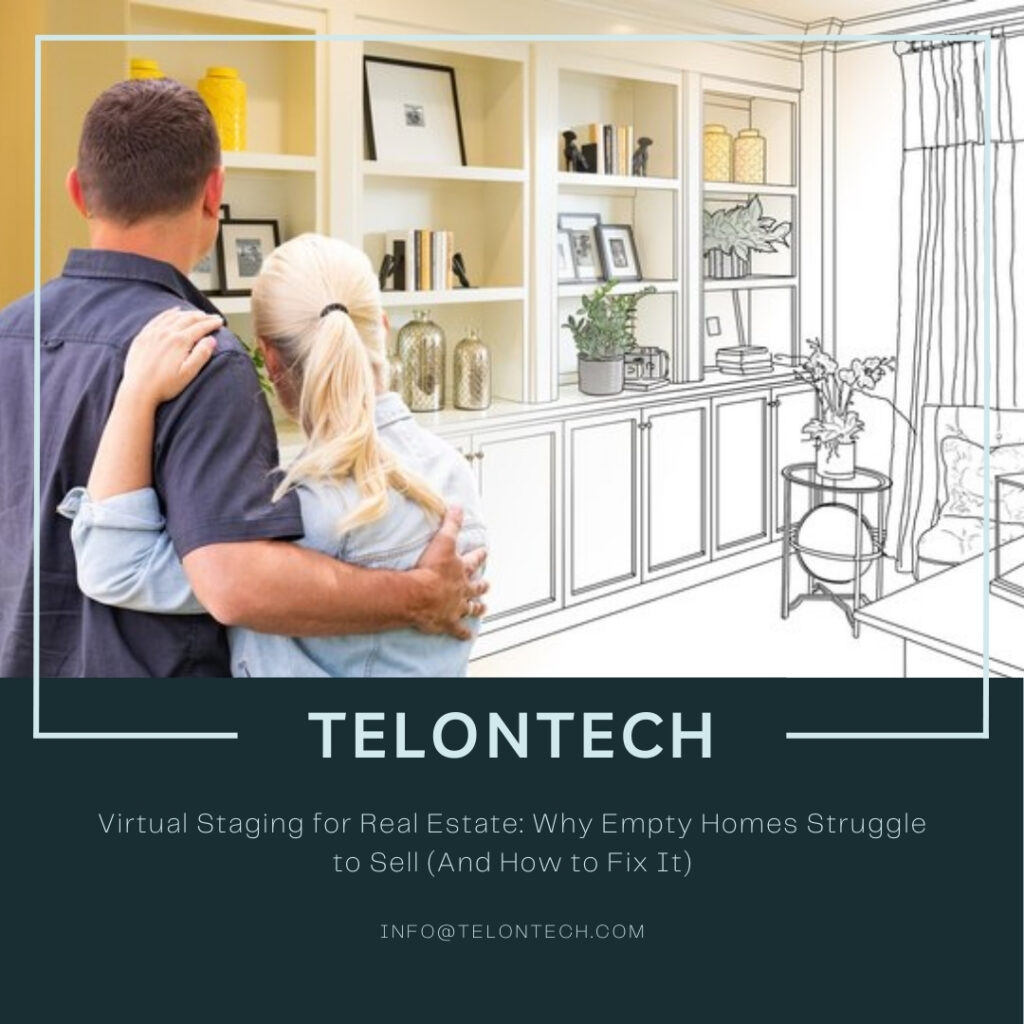
In this blog, we will explore in depth why empty homes struggle to sell, how virtual staging solves this problem, and why it has become one of the most important marketing strategies in modern real estate.
Understanding the Problem with Empty Homes
At first glance, an empty home might seem like a blank canvas. However, for most buyers, it feels cold, uninviting, and difficult to interpret. Without furniture, people cannot easily judge room sizes, functionality, or layout. A bedroom may appear smaller than it actually is, while a large living room may feel awkward and undefined.
Moreover, empty spaces lack emotional connection. Buyers do not just purchase walls and floors; they buy a lifestyle. When a property feels lifeless, it fails to tell a story. As a result, buyers move on to listings that feel warmer and more relatable.
This is one of the biggest reasons why Virtual Staging for Homes has become essential. It adds life, purpose, and clarity to empty spaces, which dramatically improves buyer perception.
The Psychology Behind Buyer Decisions
Real estate decisions are highly emotional. While buyers use logic to evaluate price and location, emotions guide their final choice. People want to feel comfortable, inspired, and excited about a home. An empty property does not trigger these emotions effectively.
Furthermore, the human brain processes visuals much faster than text. When buyers see a staged room, they instantly understand how the space can be used. They imagine hosting guests, relaxing after work, or raising a family. In contrast, an empty room forces buyers to do all the mental work themselves, which often leads to confusion or disinterest.
Therefore, virtual staging for real estate works because it aligns perfectly with how buyers think and feel. It removes uncertainty and replaces it with clarity and emotional appeal.
What Is Virtual Staging for Real Estate?
Virtual staging is the process of digitally adding furniture, decor, lighting, and accessories to property photos using professional editing software. Instead of physically moving furniture into a home, designers create realistic interiors on a computer.
This method allows real estate professionals to present multiple design styles, target different buyer demographics, and update listings quickly. For example, a modern apartment can be staged with minimalist furniture, while a suburban home can feature family-friendly interiors.
Because of its flexibility and affordability, Virtual Staging for Homes has become a preferred option for agents, brokers, and property developers across the United States.
Why Empty Homes Look Smaller Than They Are
One of the biggest challenges with vacant properties is scale perception. Without reference points, buyers struggle to estimate how big a room actually is. A large bedroom may feel cramped, while a spacious living area may look oddly shaped.
When rooms appear smaller, buyers automatically assume the property offers less value. This perception can reduce interest and lower offers, even if the home is objectively spacious.
Virtual staging solves this problem by placing appropriately sized furniture in each room. As a result, buyers instantly understand dimensions, flow, and usability. This makes the property feel more valuable and more practical.
How Virtual Staging Improves Online Listings
Most buyers start their home search online. They browse through real estate websites, social media platforms, and mobile apps. In such a fast-paced environment, visuals matter more than ever.
Listings with staged photos consistently receive more clicks, more views, and more inquiries. This is because people naturally gravitate toward images that look complete and well-designed.
By using Virtual Staging for Homes, agents can dramatically improve their online presence. Even average properties can look premium with the right staging, which increases visibility and engagement.
Cost Comparison: Physical Staging vs Virtual Staging
Traditional staging involves renting furniture, hiring movers, and paying designers. These costs can easily reach several thousand dollars per property. In many cases, this investment does not guarantee a faster sale.
On the other hand, virtual staging costs a fraction of that amount. A professionally staged photo can cost as little as a few dollars per image. Despite the low cost, the impact remains extremely high.
Therefore, virtual staging for real estate offers one of the best returns on investment in property marketing. It delivers professional results without heavy expenses.
Speed and Flexibility of Virtual Staging
Time plays a critical role in real estate. The longer a property stays on the market, the more it loses perceived value. Buyers start to wonder if something is wrong with it.
Virtual staging allows agents to update listings within hours instead of days or weeks. If a design does not work, it can be changed instantly. If the target audience changes, the style can be adjusted.
This flexibility makes Virtual Staging for Homes a powerful tool in fast-moving markets where quick decisions matter.
Customizing for Different Buyer Personas
Not all buyers are the same. Some prefer modern designs, while others like traditional styles. Some look for luxury, while others focus on simplicity.
Virtual staging allows agents to tailor interiors based on their target audience. A downtown condo can feature sleek furniture and bold colors. A family home can showcase cozy living spaces and child-friendly layouts.
This level of customization is almost impossible with physical staging. However, with virtual staging for real estate, it becomes easy and affordable.
Eliminating Distractions and Flaws
Real homes often contain imperfections. Old furniture, clutter, or outdated decor can distract buyers from the property’s true potential.
Virtual staging removes these distractions completely. Designers can clean up spaces, enhance lighting, and highlight architectural features. As a result, buyers focus on the property’s strengths instead of its weaknesses.
This is another reason why Virtual Staging for Homes works so effectively. It presents the home in its best possible version without misleading buyers.
Increasing Emotional Connection
People buy homes based on how they feel, not just what they see. A well-staged home creates a sense of comfort, warmth, and belonging.
Virtual staging helps create this emotional connection by designing spaces that feel lived-in but not cluttered. It tells a story about the lifestyle the home offers.
When buyers emotionally connect with a property, they are more likely to schedule viewings and make strong offers. This emotional impact makes virtual staging for real estate incredibly valuable.
Impact on Sale Price
Studies consistently show that staged homes sell for higher prices compared to unstaged ones. This applies to both physical and virtual staging.
When buyers perceive a property as premium, they are willing to pay more. They also feel more confident about their decision, which reduces negotiation pressure.
Therefore, virtual staging for real estate does not just help properties sell faster; it also helps them sell for better prices.
Virtual Staging for New Construction
Newly built homes often remain empty until sold. While these properties may be modern and well-designed, they still feel incomplete without furniture.
Virtual staging allows developers to showcase model interiors without physically staging every unit. This saves massive costs while maintaining strong visual appeal.
For this reason, many builders now rely heavily on virtual staging for real estate to market new developments effectively.
Ethical Use and Transparency
While virtual staging is powerful, it must be used ethically. Buyers should always know that images are virtually staged. The goal is to inspire, not to deceive.
When used responsibly, virtual staging builds trust instead of damaging it. Buyers appreciate the clarity and imagination it offers.
Therefore, professional agents always label staged images properly while using virtual staging for real estate as a visualization tool.
The Future of Real Estate Marketing
As technology continues to evolve, virtual staging will become even more advanced. Artificial intelligence, 3D modeling, and virtual reality will further enhance buyer experiences.
In the future, buyers may walk through fully staged virtual homes before ever visiting in person. This will save time, reduce uncertainty, and improve decision-making.
Clearly, Virtual Staging for Homes is not just a trend. It is the future of property marketing.
Virtual Staging Builds Buyer Confidence
One of the hidden benefits of virtual staging for real estate is the confidence it creates in buyers. When people see a well-presented home, they automatically assume it has been well maintained. Clean visuals suggest quality, care, and professionalism. Even though buyers know the furniture is digital, the overall presentation still influences how trustworthy and valuable the property feels.
Moreover, confidence reduces hesitation. Buyers who clearly understand how a space can function feel less doubt about making an offer. Instead of worrying about layout or potential issues, they focus on how the home fits their lifestyle. As a result, virtual staging does not just attract attention, it also shortens the decision-making process.
The Role of Storytelling in Property Marketing
Real estate is not just about selling space, it is about selling a story. Every home tells a narrative about comfort, success, family, or independence. Empty rooms cannot tell that story properly. They remain silent, neutral, and emotionally flat.
Virtual staging fills this storytelling gap. A dining table suggests shared meals. A cozy sofa suggests relaxation. A home office suggests productivity. These visual cues help buyers imagine their future life inside the property. Therefore, virtual staging for real estate becomes a storytelling tool that turns simple rooms into meaningful experiences.
Supporting International and Remote Buyers
In modern markets, many buyers search for properties from different cities, states, or even countries. These remote buyers depend almost entirely on visuals to make decisions. They cannot easily visit every property in person.
Virtual staging becomes extremely important in such cases. It provides clarity, realism, and emotional engagement from a distance. Remote buyers feel more comfortable making inquiries or offers when they see a staged home rather than an empty one. Thus, virtual staging for real estate plays a critical role in global and long-distance property transactions.
Reducing Time on Market
Time is one of the most expensive factors in real estate. The longer a property sits unsold, the more carrying costs increase. Mortgage payments, maintenance, taxes, and utilities continue to add up.
Virtual staging helps reduce this time significantly. Since staged listings receive more views and inquiries, they attract serious buyers faster. In many cases, properties that struggled for months suddenly gain traction after adding virtual staging. This proves that virtual staging for real estate directly influences speed as well as success.
Helping Buyers Visualize Renovation Potential
Some properties require updates or renovations. However, buyers often struggle to see potential through outdated interiors. They focus on current problems instead of future possibilities.
Virtual staging allows agents to showcase what the home could look like after improvements. Designers can add modern furniture, updated lighting, and stylish decor. This helps buyers focus on opportunity instead of flaws. Consequently, Virtual Staging for Homes becomes a powerful tool for selling fixer-uppers and older homes.
Strengthening Brand Image for Agents
Professional presentation builds brand authority. Agents who consistently use high-quality visuals appear more experienced, trustworthy, and successful.
When every listing looks polished, clients feel more confident choosing that agent. Over time, this creates a strong personal brand in the market. Therefore, virtual staging for real estate does not just help sell homes, it also helps agents grow their reputation and business.
Social Media and Digital Advertising Benefits
Social media platforms depend heavily on visuals. Staged images perform far better than empty room photos in ads, posts, and stories.
Virtual staging allows agents to create scroll-stopping content that attracts attention instantly. More likes, shares, and clicks mean more exposure and more leads. In digital marketing, visuals decide performance, and virtual staging for real estate gives agents a competitive advantage.
Environmental and Sustainability Advantages
Physical staging requires transportation, furniture manufacturing, storage, and logistics. All of this creates environmental impact.
Virtual staging removes these physical requirements completely. It produces zero waste, no fuel consumption, and no material usage. From a sustainability perspective, virtual staging for real estate is a greener and more responsible solution.
Long-Term Value in Real Estate Strategy
Virtual staging is not just a short-term tactic. It creates long-term value in marketing strategies. Once agents build a library of staged styles, they can reuse and adapt them for future listings.
This creates consistency, efficiency, and scalability. Over time, virtual staging for real estate becomes a core asset rather than a one-time service.
Conclusion
Empty homes struggle to sell because they fail to create emotional connection, clarity, and visual appeal. Buyers cannot easily imagine themselves in vacant spaces, which leads to lower interest and longer selling times.
However, Virtual Staging for Homes solves these problems effectively. It transforms empty properties into beautiful, functional, and inspiring homes. It improves online visibility, increases buyer engagement, reduces marketing costs, and boosts sale prices.
In today’s digital-first real estate world, virtual staging is no longer optional. It is a strategic necessity for anyone who wants to stand out, attract serious buyers, and close deals faster. By embracing this powerful tool, agents and sellers can turn empty houses into irresistible homes.